 logo

Sometimes, we get so wrapped up in the day-to-day business of running a business that we forget the importance of marketing basics, like segmentation (and targeting), value (including developing a strong, unique value proposition), encouraging consumers through the decision-making process, the impact of post-purchase behaviors and attitudes (such as satisfaction, repeat purchase, and recommendations), and how without constant innovation your brand is falling behind. So, let’s take today to return to marketing basics that generate greater brand success.

Table of Contents
Why marketing basics matter
Too often, I run across marketing folks who either don’t have marketing chops or who aren’t using them to their full advantage. That’s a shame because those marketing basics work in real life and, if you aren’t using them, your efforts won’t produce the marketing performance they might.
Maybe they forget the basics learned in a long-ago marketing class, or maybe they feel that changes in modern markets and tactics render them less valuable. Marketers get used to doing marketing the way it’s always been done, focusing on advertising and selling, rather than recognizing the value of the other 3 Ps of marketing — product, place, and price. They focus too much on pushing products to consumers and not enough on pulling consumers to their products. The results can be disastrous. But all is not lost. Today, we’ll discuss the five marketing basics that will quickly improve your market performance. So, let’s move on.
Marketing basics
Below, we’ll discuss each of these in no particular order. If you prefer, I also developed a video series designed especially for small business owners and managers. In each video, I dive into one of these topics (as well as others critical for success, such as creating a marketing plan and digital advertising) in depth. You can view the entire series or hone in on the topic(s) you find most valuable for your business.
I start with this video, which provides an overview of what marketing is (and isn’t):
1. Segmentation
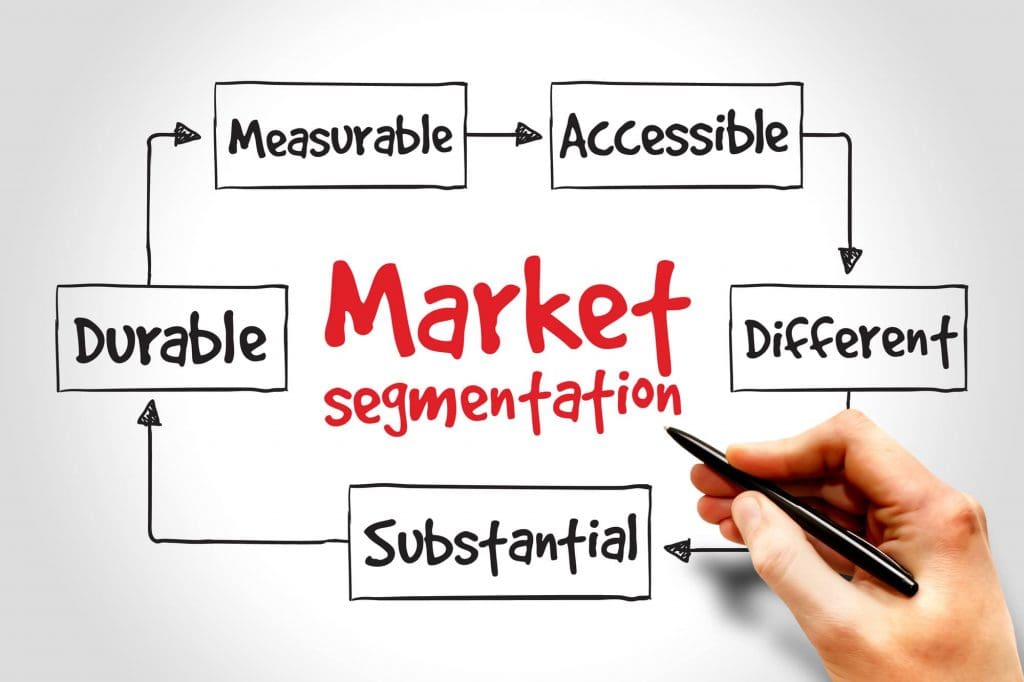
Not all consumers are alike (in fact, they can be very different) and they don’t all want the same things from a product. So, it makes sense to divide up the market into groups that share a similar location, lifestyle, communication channels, demographic characteristics, needs, etc. Often, practitioners call the resulting group personas or target markets, in the parlance of marketing basics. An effective segment possesses all the characteristics shown in the image above. Effective market segments are:
- Different from the population along some meaningful characteristics. We call these target markets.
- The segment is substantial enough to justify the marketing effort and cost associated with serving that segment. This may involve developing different products, different distribution channels, or different pricing, as well as different promotional efforts. We call this positioning. For instance, you might using a tiered pricing strategy whereby you create different products or even different brands to capture each segment. Toyota does this with its Lexus brand, which focuses on a higher-income market, and haute couture brands do the same, marketing ready-to-wear for department stores.
- Durable target markets are ones that will likely trend into the future without much change. For instance, cohort-based target markets, such as Gen X, tend to retain similar values, attitudes, and decision-making strategies even as their needs change over time in a somewhat predictable manner.
- Accessibility refers to your ability to reach the target market selectively. For instance, you might use digital marketing to laser-focus your advertising on a group of users with desirable characteristics.
- Measurability refers to your ability to effectively assess the size of the segments within a population.
Once you have your groups, personas, then construct specific marketing messages that likely resonate with this group. Every product has a range of uses and features. Simply highlight those uses/ features most important to each target group. But, be careful not to say anything that one persona will find disturbing — remember, messages tend to overlap markets, not stay easily within a single market.
If you want a more in-depth treatment of segmentation, targeting and positioning, check out this video from the Small Business Marketing Series.
2. Value
Consumers don’t care about price; they care about value. Moreover, if you offer a lower price than your competition, nothing stops them from lowering their price to outcompete you. That’s why you never want to compete on price unless you possess something that keeps your costs lower than the competition in the long run, such as proprietary technology or sourcing. The image below depicts the interaction of factors that create customer value, some of which you might not think of initially.
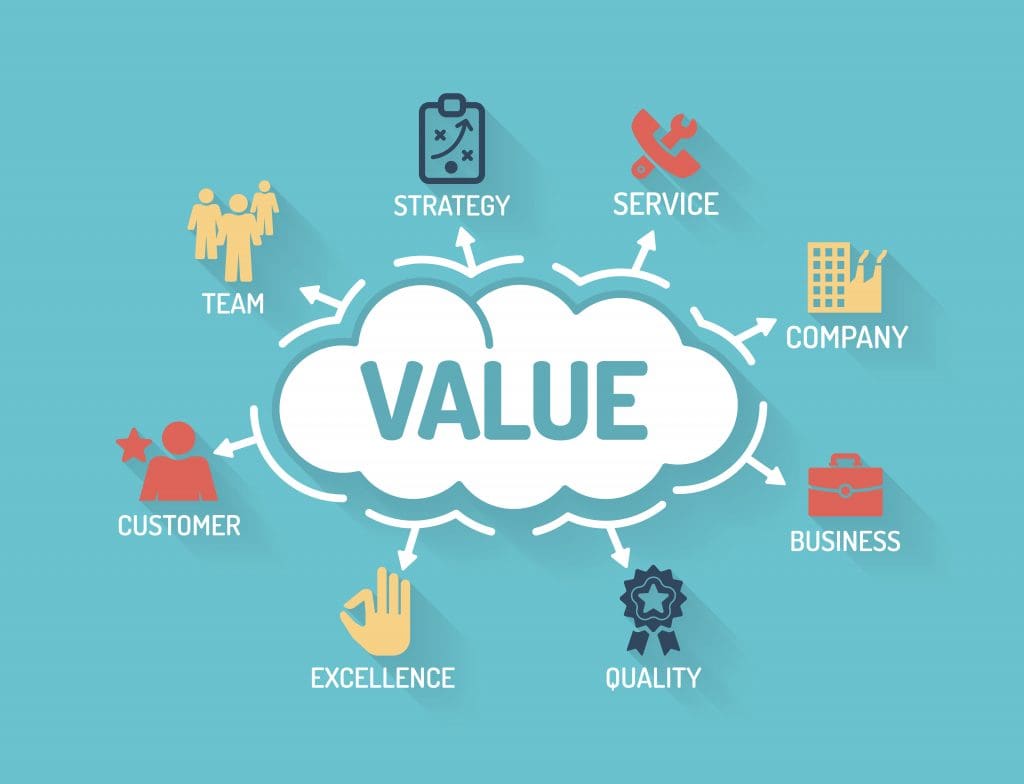
If your brand provides sufficient value, then it’s a simple matter of communicating that value effectively and helping them afford your brand with things like financing, discounts, etc.
Again, value is not absolute. It’s a function of how a particular persona views your product, so some personas might find more value in your product than others.
Because the price isn’t the ultimate decision-making variable, dropping your price is often not the right strategy. Instead, use the money you might have lost to a discount to improve your product — increasing its value.
3. Decision-making
How do consumers make decisions on which products to purchase? Purchase decisions are often the result of simple heuristics that reduce the effort needed to make a decision, such as what’s available in the store, purchasing a familiar product, choosing one you saw in a recent ad or recommendation, or using emotions.
In other cases, it’s unpredictable who and when consumers will use this process; consumers use a multi-stage process like the one below, even if that process happens quickly without awareness of each stage.
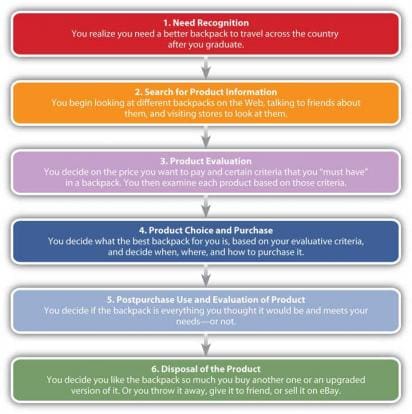
If you want to understand this process in more depth or see how you can influence this process, here’s a post that will help.
Let’s talk about influence for a moment, as this is an important factor in consumer decisions. Other consumers, even relative strangers, can influence decisions, such as another shopper picking up a product or mentioning one in a meeting. The most impactful influence on decisions comes from family and friends, even when those “friends” are simply connections in a social media community. Outside influencers include newer sources such as AI tools. Tapping into marketing basics involves using influence effectively through the decision-making process.
Advertising is just one form of influence. While not the most effective, advertising does have significant reach (how many people see your message) and frequency (how often they see the message) and offers greater control than other forms of influence. Maybe at one point, advertising was a bigger influence on buying decisions, but that time is long gone. Now, social influences are more important in driving customer decision-making.

Today, rather than crafting influential messages, the marketer should focus on motivating the spread of messages favorable to their brand through their chosen markets. That means creating engagement both online and off. Here are some options:
- Sponsor a cause that resonates with your target audience, whether that’s political, social, or humanitarian. And, do that sponsorship in a public way, such as sponsoring an event, sharing the message of your sponsorship among influencers, or highlighting your charitable efforts using traditional media. Sponsor with more than money, or if you do give money, make it big. For instance, JK Rowling, who wrote the ‘Harry Potter’ series, recently dropped off the billionaire list through charitable giving to an unpopular group, which sparked a firestorm on social media.
- Tap into influencers by giving them a reason to support your brand. For instance, give them access to free products, insider access to your people or events, recognize their efforts to support your brand, or trade support for them in exchange for them supporting you. The key here is that it has to be authentic, not just giving people stuff to buy their good reviews. For instance, NASA invited a group of Twitter influencers to watch a launch, giving them the same access as traditional reporters.
- Use Cialdini’s weapons of influence –
- Reciprocity
- Consistency and commitment
- Social proof
- Authority
- Liking
- Scarcity
Decision-making is often messy and hard to assess, as consumers can’t usually tell you how they came to a particular decision. Here are some aspects of decision-making to bear in mind as you build your marketing basics toward success.
- Consumers don’t necessarily move through the decision-making process in a smooth, linear fashion. Sometimes they cycle, sometimes several times. Other times, they get stalled at some point and don’t move forward for a long time, sometimes never.
- Consumers vary significantly in how they make decisions. Some do it quickly, others take a long time and require lots of information for the most mundane decision.
- Every consumer uses different heuristics in making decisions.
- Consumers spend a lot of time in post-purchase evaluation to improve their overall decision-making process.
- Outside factors, such as mood, have a significant impact on the customer decision-making process.
4. Satisfaction
Consumers need to be happy with their purchases both immediately after making the purchase and in the long run, especially for products seen as durables.
Happy customers buy again (are loyal), share their appreciation for your products, and reduce the cost of handling complaints, returns, etc.
Many companies do a good job of tracking satisfaction by sending out surveys, monitoring online sentiment … But, too few use this information to improve market performance. Getting back to marketing basics means using effective tools, including observational ones, to determine whether consumers are satisfied, and then using data to improve satisfaction.
Instead, listen to what consumers say about your brand, your competition, and in general about the problem your product solves. One concept of consumer satisfaction compares the performance of a product against expectations. Based on the gap between expectations and performance, consumers develop different levels of satisfaction, as shown below. Put that information to use in crafting better products and better messaging to position your product in the market.
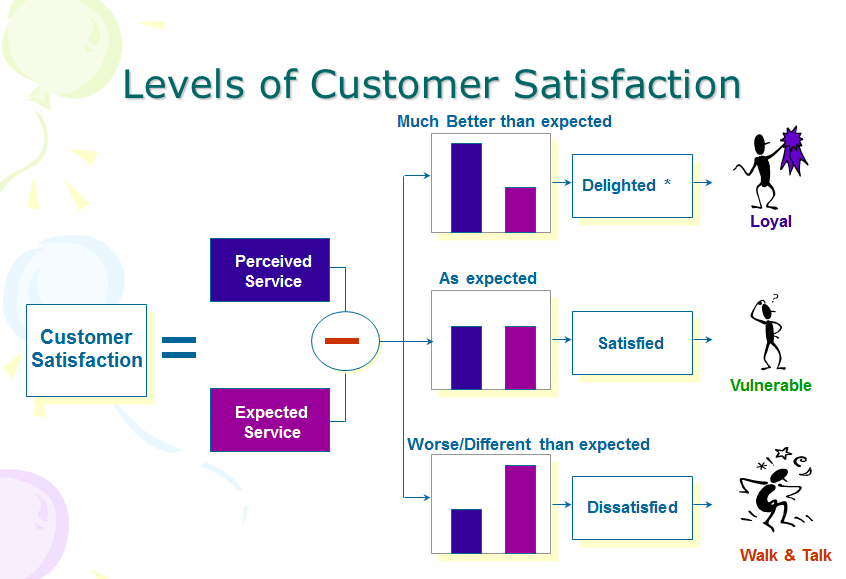
One simple step toward improving satisfaction is to do what you promise customers, then keep (or exceed) expectations. Don’t promise the world, then deliver the state of Nevada. Promise them, Nevada. This is where advertising kills the golden goose — by promising the product will outperform alternatives, then doesn’t perform as expected.
Think about cleaning products, for instance. They promise they’ll get something clean with minimal effort and almost nothing delivers on that promise. Hence, the trend is back to products like ammonia and away from more pricy branded products that don’t exceed the performance of these simple ones.
5. Innovate your way to success
If your brand isn’t moving forward in a substantive way, it’s moving back. That’s one of the most foundational marketing basics: change is inevitable.
Your market preferences and needs change
Your competitors catch up and pass you by
Technology changes, allowing newer products and processes
Innovation means more than just doing a “new and improved”. It means creating totally new products or significant improvements over existing ones. That often leads to creative destruction, whereby you’re creating the replacement for your existing brands. Firms that fear such cannibalization sentence themselves to defeat by a competitor who will.
And, when I say innovate, I don’t mean just your product innovation, but your tactics, as well. Don’t just do the same marketing you’ve always done, simply changing the message. Shake it up; do something new.
 Measure, forecast, monitor, iterate

Getting back to marketing basics means more than relying on these marketing basics. It requires you to monitor your performance, using insights gleaned from relevant data to improve forecasts (which improve performance) and to change your approach to marketing basics.
Finally, don’t just do things. Forecast what the change means for your bottom line today, in five years, in 10 years.
Measure the results of your marketing plans.
What worked and what didn’t?
How do you improve the things that didn’t work based on learning from those that did?
Monitor performance. Do A/B testing.
Listen.
Need marketing help to support business growth?
We welcome the opportunity to show you how we can make your marketing SIZZLE with our data-driven, results-oriented marketing strategies. Sign up for our FREE newsletter, get our FREE guide to creating an awesome website, or contact us for more information on hiring us.
Hausman and Associates, the publisher of MKT Maven, is a full-service marketing agency operating at the intersection of marketing and digital media. Check out our affordable coaching programs to help your business thrive into the future.
Discover more from MKT Maven
Subscribe to get the latest posts sent to your email.


