 logo

Is your brand so Meh that consumers quickly discard any notion that it fits into their self-image? Does your target market see your products as boring, old-fashioned, bland, or unoriginal? Well, it’s time to fix that if you want to survive. Today, we’ll discuss five ways to shake up your brand, so your target market will stand up and take notice. So, read on!

What is a brand?
A brand personifies your products to your target market, creating emotions, attitudes, and meaning that drive purchase decisions. According to Harvard Business School Professor Jill Avery, who teaches the online course Creating Brand Value:
An effective brand resonates with consumers. It powers their purchasing decisions and reflects who they are and what they stand for. Yet, competing for consumers’ attention and actually capturing it and retaining it has never been more difficult.
Of course, the difficulty in branding comes from various sources, including:
- An explosion of brand options in nearly every market
- Increased diversity among potential consumers
- Fractioning among communication channels makes it hard to create your brand because customer experience, advertising, and product placements are diluted across channels.
- It takes time to build a brand based on consumer experiences with using the brand and brand associations, which helps develop a personal relationship with it.
Building a brand isn’t easy, but the payoff is immense. Consider the Coca-Cola brand, with an estimated brand value of $73.1 billion. Here are some of the most valuable brands from around the globe (although this is a little dated).

Now that you see the value of building a strong brand, let’s talk about how to shake up your brand so you can appear on that list soon.
How to shake up your brand
Being the same as everyone else or trying to be everything to everyone are strategies doomed to failure. Starting and running a successful business means you must figure out what your company stands for and translate that system of values to your target market. Your company identity inspires your customers to choose you over your competition and employees to build a successful organization that reaches its goals.
The first step to shake up your brand is building brand awareness; getting your name out and defining what your brand stands for. Over time, this brand awareness translates into brand knowledge, which is deeper and more influential on purchase decisions. For instance, the computer/ tech market is full of competitors. Apple did a nice job of creating a brand that’s uniquely positioned compared to every other computer company out there and that difference is summed up in a single image used in an early ad for the Macintosh computer. They’ve sustained that image with other products they market. 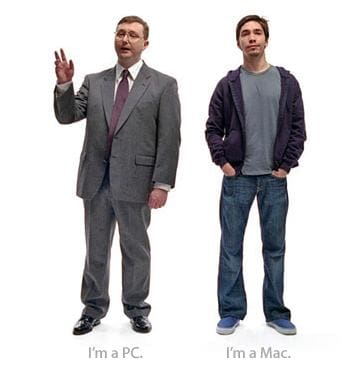
So, which image should you create to shake up your brand? A recent survey of consumers between the ages of 18 and 64 found some interesting results that can help you find a brand identity that drives some segment of consumers to buy your brand over your competitors’ brands. Let’s take a look at the five factors that determine consumer choice in 2024.
1. Mission and values
Consumers increasingly choose brands that share their values. That’s especially true among younger consumers aged 18-24, according to the survey. And, this desire to support brands that share your values appears to extend to much of the rest of the world, not just the US. Of course, various consumers care about various social causes, so you’ll find a target market that shares whatever values you determine to include in your mission as long as your business is authentic (which matters to 98% of consumers) and displays these values with the actions it takes. For instance, you can state your interest in sustainability, but if you run a coal-based electricity business, you’ll find it hard to go with consumers who care about this value. Instead, you might actually invest in advanced technology to clean the pollution caused by your business and begin investing in alternative energy sources.
Positioning is a big part of branding. Hence, you might have a number of values built into your mission statement, but you should only position your brand as aligning with a few of them to avoid muddying your brand with too much information. Below are some values that resonate most strongly with younger consumers:

2. Design elements
While your brand is more than design, a great design can shake up your brand. First, consider the tone and voice of your communications. Depending on your target market, you might choose from the following, which are considered important by more than 50% of consumers in the survey:
- Warm and inviting
- Trusted and knowledgeable
- Innovative and modern
You should also consider visual elements of your brand, such as colors, as these convey meaning to your target market about what your brand is. Consider John Deere, which patented its specific shade of green so no other brand could copy its machines. Here are some results from the survey:
- Primary colors are stronger
- Red implies power, but it also attracts attention
- Blue is calming and is often seen as competent for businesses that sell to other businesses
- Yellow is considered friendly
- Green is associated with environmental friendliness and wisdom
- Gold implies luxury (think Godiva)
Next, create a professional logo, font (rather than use a standard one) and a tagline (or slogan) that reinforces your branding. The key is using these design elements consistently in everything you do to quickly identify your brand, but more as a shortcut to represent everything you are to consumers.
3. Create a brand story
It’s important when trying to shake up your brand to build a brand story. This story makes your brand more real and gives consumers a way to identify with your brand. A good brand story embeds your values and brand personality and defines what makes your brand unique. The reality is that consumers choose brands that are “for them”, that define who they are to both themselves and to those around them. Thus, they choose brands that “fit” their self-image as a tool to reinforce that image. For instance, consider the brand personalities of some of the largest brands shown in the image below.

Consumers choose these brands over the competition because they see themselves as having a similar personality.
4. Build for quality
You can’t shake up your brand with poorly made products that don’t last. In a world where consumers have a wealth of advice in the palm of their hands, you can’t afford to have them encounter complaints, poor ratings, or negative recommendations.
It isn’t easy to always deliver quality, but you can when you have processes in place to ensure you limit failures. For instance, using a zero defects process, you can reduce the chances of producing defective products by catching deviations from specifications during the manufacturing process. By auditing your service delivery process, you can detect and eliminate most service failures before they occur. And, with logistics channels monitored by AI and tracking tools, you can reduce stockouts and late deliveries.
No company can eliminate 100% of failures. Thus, addressing problems before they escalate is critical to your brand’s success. Listen to comments across social media platforms, not just on your profile pages and platforms where you post content. Monitor customer service calls to identify commonalities, so you can develop processes to eliminate recurring problems. For instance, a company found that the most common complaint was late deliveries by its drivers when it allowed customers to reduce their bills if they provided a reason for the reduction. Since these customers were often located in remote areas that weren’t shown on GPS maps, he instructed his staff to collect directions when taking the order and add them to the bill of lading. It then benchmarked against on-time delivery against Dominos, which was running a 30-minute or less promotion. Every month, when his staff had a higher proportion of on-time deliveries, the Domonos staff bought them pizza. He said after the first month, they were eating a lot of pizza.
5. Monitoring and analysis
If you think it’s guessing when trying to shake up your brand, you’re missing a key point — monitoring. If you’re not monitoring your key metrics and analyzing what the data means for your success, you’re shooting in the dark. Instead, develop a list of KPIs (key performance indicators) and create an interactive dashboard that displays them all in one place. By developing visualizations of the data, you’re in a great position to shake up your brand by making data-driven decisions that improve performance.

Conclusion

You can shake up your brand using these five ways:
- Clearly articulating your mission and values, then being authentic in the ways you demonstrate them
- Using a professional design to represent your brand in ways that resonate with your target market
- Create a brand story
- Build quality into your products and deliver superior customer service
- Monitor and analyze your results to make better decisions
Need marketing help to support business growth?
We welcome the opportunity to show you how we can make your marketing SIZZLE with our data-driven, results-oriented marketing strategies. Sign up for our FREE newsletter, get our FREE guide to creating an awesome website, or contact us for more information on hiring us.
Hausman and Associates, the publisher of MKT Maven, is a full-service marketing agency operating at the intersection of marketing and digital media. Check out our full range of services.
Discover more from MKT Maven
Subscribe to get the latest posts sent to your email.


This article really explains branding in a very practical way. I liked the part about building a brand story because it truly connects with the audience. Consistency and values are the real game changers. Keep sharing such valuable insights.
Thanks for your kind words. You might want to check out my YouTube channel for more insights for marketing a small business.