 logo

Are there really digital marketing rules? In a world that appears to be a “free-for-all,” do companies have to follow rules to optimize their market performance? With the changing nature of search, the intensification of competitive pressures, a significant increase in the use of digital information, and the increased fragmentation of markets into tribal communities, you need to follow these digital marketing rules if you want to keep your business afloat. Growing your business and succeeding long-term requires you to master them.

The digital marketing rules you need
Are there only 10 digital marketing rules? Likely, there are more than 10. However, these 10 are universal without regard for industry, market, region, or technology. I’d love to have you add to the list if you think I’ve left any out. Simply add your ideas in the comments below. Meanwhile, here are my top 10, gleaned over decades of experience in marketing and, more recently, digital marketing.
- Plan, don’t act.
- Employees are your most valuable asset, followed by your fans.
- Balance your SEO (search engine marketing) efforts with newer GEO (generative engine optimization) that help you achieve brand mentions by AI models.
- Know your target market deeply.
- Create unique, value-driven content.
- Be human.
- Focus on KPIs (key performance indicators) rather than vanity metrics. Prioritize those KPIs along the customer journey.
- Consolidate your tool stack.
- Adopt a multichannel strategy.
- Ethics should be your guiding principle.
- Test, adapt, and iterate constantly.
In the next section, I expand on each of these digital marketing rules, briefly explaining each one. You’ll also find an embedded link to more detailed pages you can use to discover tactics and best practices for mastering each of them.
1. Plan, don’t act
Does your business have a marketing or business plan? Do you even know what’s involved in developing a thoroughly researched marketing plan? If not, I have posts on this site that help guide you to develop this critical first step toward success.

Sure, you’re excited to start your new venture or you’re buried in the essential tasks necessary to run your business day-to-day, but don’t ignore the importance of building a well-researched business plan (or marketing plan) that helps you achieve the success you crave.
2. Employees are your most valuable asset
The entire focus of the labor movement was fighting for workers against the power of employers bent on worker exploitation. Despite these changes, the prevailing notion in many companies is that employees are an unfortunate, but necessary part of running a business. Does that make sense?
One of the digital marketing rules that predates the internet, just like the first one about planning, is that employees are an asset to the business. That makes sense if you think about all your employees do to benefit your business, they:
- Serve customers to ensure they’re satisfied. You can institute all the bonus schedules you want, but there’s no substitute for having employees who are happy, rewarded, and engaged with their jobs for making customers happy.
- Employees are your front line, so they have a more intimate relationship with your customers and know more about them than you ever could. Engaged employees contribute ideas for innovations, ways to improve customer interactions, and are your defense when things go awry.
- Employee turnover is expensive, both in terms of the costs to replace employees who leave (including those associated with lower initial performance by new hires and brain drain) and because it’s often your best employees who leave because they have more opportunity. This leaves you with lower-performing employees over time.
- Because employees are the face of your brand, losing them means losing effective brand ambassadors. They are a big part of your brand image to retain customers.
3. Balance SEO and GEO
A year ago, developing and implementing a strong SEO strategy was a critical tool in driving traffic to your website. Today, brands can lose 60+% of their traffic because users employ AI to answer questions without having to access their website. This requires a reengineering of your website and the content you produce if you want to acquire brand mentions in these AI-generated answers. Instead of driving traffic to your website alone, your goal is to glean brand mentions that help users discover your brand and influence buying behavior.
 Today, you must balance your efforts at both SEO and GEO, driving traffic and brand mentions if you want to succeed. Luckily, adapting to a GEO strategy requires tweaks to your content marketing strategy, such as using structured schema markup, focusing on E-E-A-T (expertise, experience, authority, and trust), and crafting query-based responses.
4. Know your target market
This is another of the digital marketing rules that predates the internet. It’s always been crucial to understand your market. The difference in the internet age is that you have access to deep insights into your market that allow you to move beyond demographics and geography to develop rich personas like the one below.
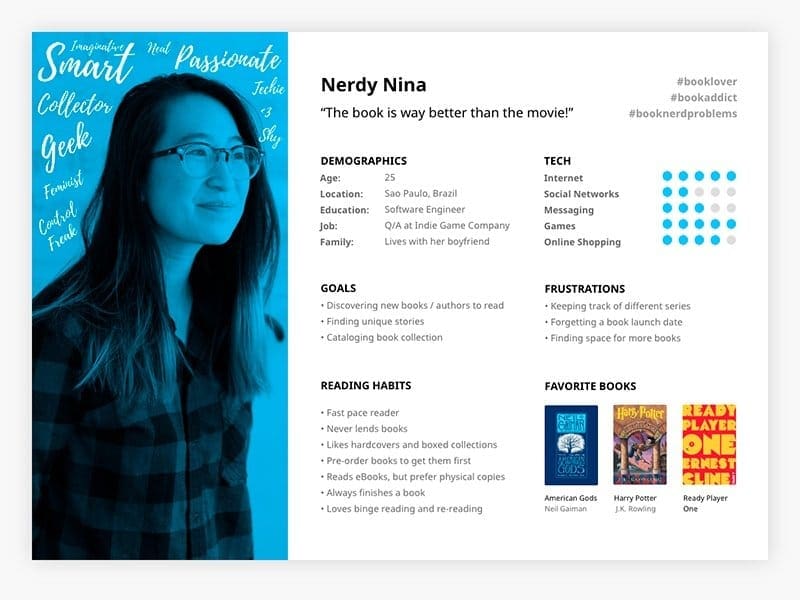
Armed with these insights, you can now more effectively:
- allocate your marketing budget
- develop listening programs to assess brand image, identify opportunities, and track trends
- create landing pages and customer journeys that improve conversion rate
- craft marketing campaigns that deliver results
5. Create unique, value-driven content
Understanding what information (or entertainment) your market wants and giving it to them is key to market performance.
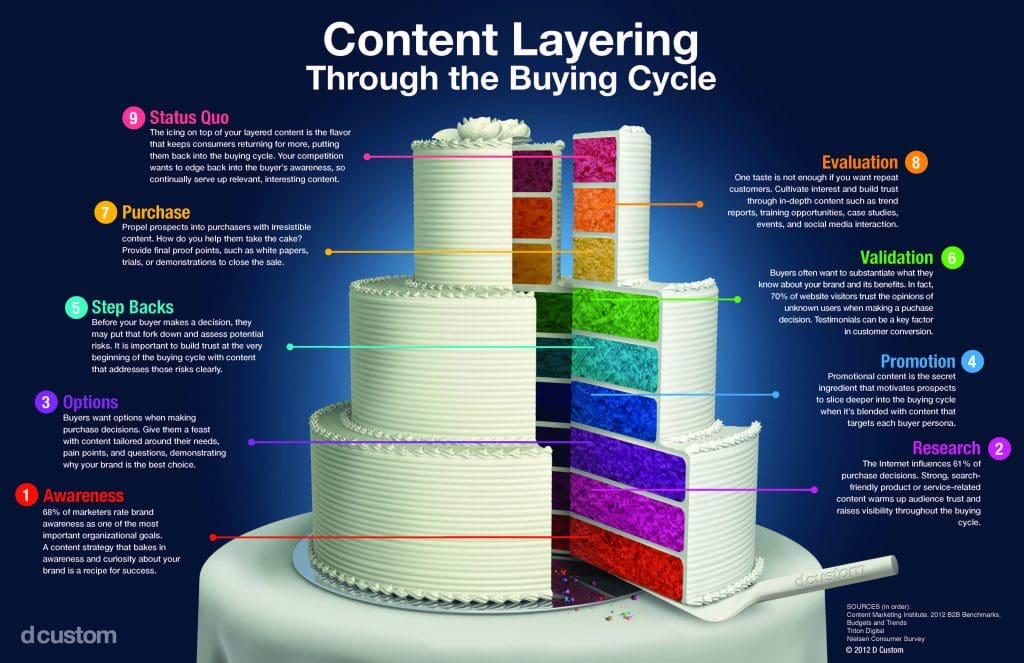
It’s also important to match content to the customer’s stage of the buying cycle; see the infographic above.
Matching content to stage in the buying cycle also requires that you know who your customer is and what they’ve done, so you can send them to the right content. A good example of this is the way Amazon personalizes content for individual users. It’s no accident that they dominate the e-commerce scene with their algorithms that use a customer’s past searches to identify products they’ll like.
Similarly, don’t make content about you; make it about them. Giving your market something gives you permission to tout your brand a little. Increasingly, content should be embedded in the social stream rather than interrupting it with commercial messages. Consumers quickly learn to block out commercial messaging and ignore it almost totally.
For instance, advergaming is increasingly popular. Set up a contest, especially one where everyone wins rather than one where consumers compete against each other, and they’ll help spread your message. Consumer-generated content is the best, most believable content.
Optimize market performance by creating native advertising rather than interrupting the flow.
6. Be human
People want to talk to real people, not brands. So, it’s ok to make a few mistakes in spelling or something. People make mistakes, and no one is perfect. In fact, some mistakes are really funny, especially if you’re willing to laugh at yourself.
Also, be yourself, but not too much of yourself. After a recent spat with Disney over her racist tweets, Rosanne’s show was immediately canceled.
Optimize market performance by being real and talking to people on social media, your website, and email messages as if they were individuals, not a nameless group. Encourage sharing and other forms of engagement by sharing and engaging with your visitors and those who mention your brand on other pages. Address both positive and negative comments. Remember, negative comments help you get better.
7. Focus on KPIs
Possibly the most critical digital marketing rule is to measure, analyze, and use key data to build the insights necessary to make effective decisions.

Ideally, you should focus on metrics that affect ROI 9 (called KPIs), such as actions taken by visitors, rather than vanity metrics that have little meaning on their own, such as the number of followers.
However, focusing on KPIs doesn’t mean you only consider conversion. Remember, conversion happens at the END of a process. That means you must focus on metrics reflecting the entire customer journey if you want to improve your conversion rate and revenue. Here are some critical KPIs to include in your measurements:
- Customer acquisition costs
- Conversion rate
- Customer lifetime value
- Return on advertising spend
- Cost/ lead
- Organic traffic
- Brand mentions in social, AI, and media
- Bounce rate
- Time on site/ page
- Shopping cart abandonment rate
- Engagement rate
- Follower growth rate
- Reach, frequency, and impressions
- Brand awareness
- Reputation
- Cost/ click
- Open rates
- Click-through rate
These are the standard KPIs you should assess and analyze on a daily basis. Setting up a dashboard containing these metrics helps bring everything together across various marketing platforms to make your job easier. Make the dashboard interactive to allow you to compare across time periods, regions, and customer types to provide more nuanced insights.
8. Consolidate your tool stack
It’s very easy to keep adding tech tools to handle individual marketing tasks. Soon, you’ll find yourself paying for tools that provide overlapping capabilities. That wastes scarce resources. Instead, periodically audit your tools to eliminate those that are redundant or provide capabilities that aren’t essential for the smooth functioning of your digital marketing strategies.
The same goes for social media platforms, landing pages on your website, advertising campaigns, and email marketing sequences. For instance, over time, your target markets might shift from one social media platform to another. Facebook offers a good example of this as the demographics trend older every year, as younger users shift to Instagram and TikTok, spending less time on Facebook or abandoning it altogether.
Digital marketing rules suggest that you allocate time and money where they’ll do the most good and eliminate those activities that contribute less to your performance.
9. Adopt a multichannel strategy
You need to be where your target market hangs out, balancing your capacity with being where they are. For instance, managing a website is essential because you have total control over it. The same is true of email marketing. You might want a few social media platforms as an additional means to reach your customers and prospects. Don’t put all your eggs in one basket by only having one of the channel options. Below is some information to help you choose the right platforms.
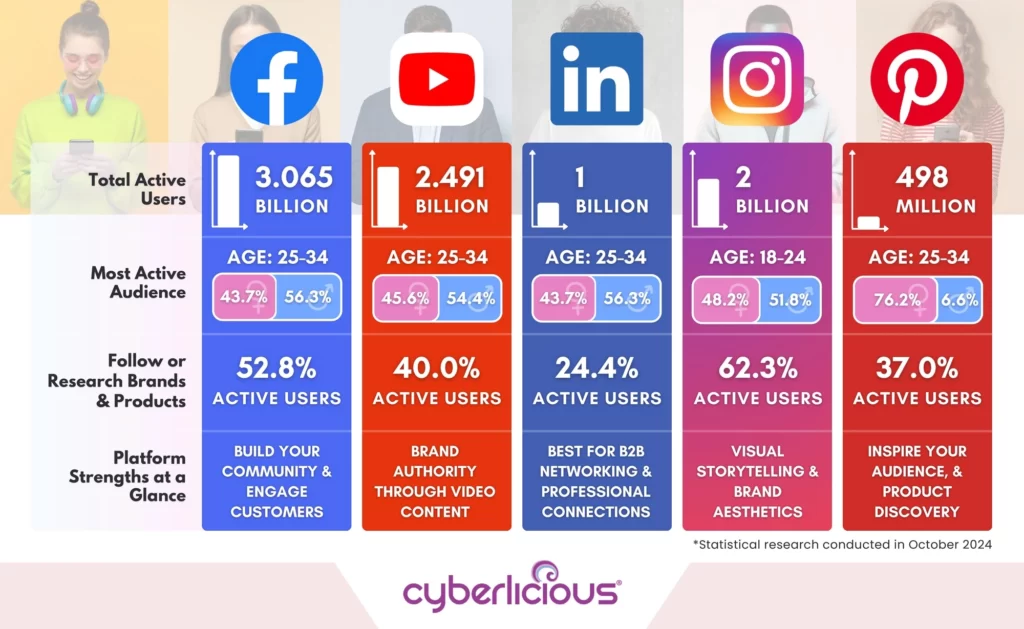
It’s important and challenging to integrate your messaging across platforms and with offline messaging. This can be especially challenging when firms organize marketing efforts such that different groups of employees manage different platforms or when online and offline are managed by different groups.
Without such integration, your message gets garbled and consumers don’t know who or what you are. Brand image is crucial for success, so it not only matters to establish a brand image that resonates with your target markets, but also to have a consistent brand across platforms. For instance, consider how car sales get messed up when the brand (GM, Ford, etc) produces high-quality advertising, while the local dealer puts together something of really poor quality.
10. Ethics matter
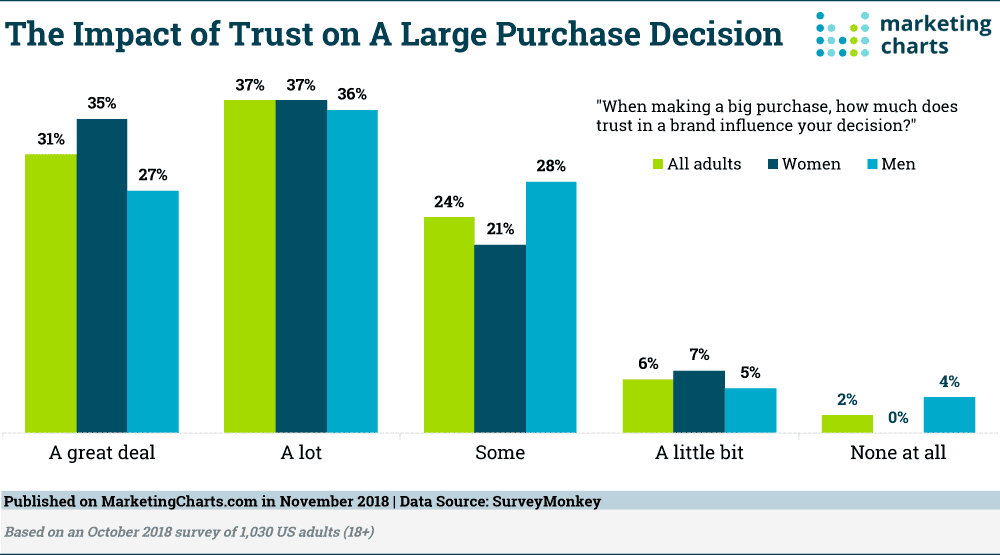
Digital marketing rules mandate that all your interactions, communications, policies, and transactions demonstrate high ethical standards. Ethical business behaviors engender trust, which has a huge impact on purchase decisions, as you can see from this graphic.
Ethical digital marketing practices include [source]:
- Stringent adherence to privacy protections
- A commitment to socially responsible marketing and sourcing
- Ethical treatment of customers, suppliers, and employees
- Fair and accurate advertising
- Transparency in all communications
- Fair competition
Failing to adhere to stringent ethical standards has serious consequences beyond simply losing sales. You can face criminal or civil prosecution, fines, and reputational damage that may lead to boycotts or vandalism. Similarly, you may face issues with suppliers, banks, and investors that cause operational roadblocks. Employees would rather work for ethical companies, so even if the unethical behavior doesn’t affect them personally, you might face higher turnover and absenteeism.
11. Test, adapt, and iterate
Data-driven decisions offer the best long-term opportunity for your business. One of the digital marketing rules involves using data to guide decision-making.
We already discussed what to track as part of the digital marketing rules # 7, so here let’s confine our discussion to analysis. View your interactive dashboards on a daily basis. Compare your results with benchmark companies and past performance to determine whether you’re on track to meet your goals or not. If you find the results don’t meet expectations, it’s time to tweak your campaign in hopes of achieving better results.
When running digital advertising campaigns, you should view results soon after the campaign goes live, then frequently over the next few days to allow changes that will improve performance. Google Ads will automatically use a combination of supplied descriptions, calls to action, and keywords using AI to quickly determine the best-performing combination, then only show that version in the future.
Experimentation is key to providing insights that help you deliver the best performance.
Conclusion
While you might view marketing as a creative activity that shouldn’t adhere to hard and fast rules, digital marketing rules aren’t negotiable. You must apply these rules in every marketing action to achieve the best results.
Creativity has a place within digital marketing, but it doesn’t override the digital marketing rules.
Need marketing help to support business growth?
We welcome the opportunity to show you how we can make your marketing SIZZLE with our data-driven, results-oriented marketing strategies. Sign up for our FREE newsletter, get our FREE guide to creating an awesome website, or contact us for more information on hiring us.
Hausman and Associates, the publisher of MKT Maven, is a full-service marketing agency operating at the intersection of marketing and digital media. Check out our affordable coaching programs to help your business thrive into the future.
Discover more from MKT Maven
Subscribe to get the latest posts sent to your email.


